Navigating highways and byways in winter can be a challenging task, even for experienced drivers. Elements like snow, ice, freezing rain, and an overall reduction in visibility can turn familiar roads into hazards and increase the chances of accidents happening. Getting your vehicle winter-ready and shifting your driving habits according to the weather can go a long way in helping keep you, your passengers, and everyone on the road safe.
Use eTags© to Quickly Complete Your DMV Service. Renewals, Title Transfers and More, All Online!
Whether you’re a daily commuter, just popping out to run errands, or if you’re planning a long road trip, the right knowledge can help get you to and from your destination in cold-weather conditions more safely. In this article, we’ll review eTags’ five essential tips for winter driving safety.
What Are the Dangers of Winter Driving?
Cold weather can affect your tires’ ability to maintain good traction, requires more stopping distance, and can make it tougher to spot other vehicles, pedestrians, and potential road hazards. Freezing winter temperatures can also impact your car’s battery, overall tire pressure, and other important vehicle components.
According to the Federal Highway Administration, inclement weather conditions add to hundreds of thousands of vehicle accidents each year in the United States. Getting familiar with winter hazards and being prepared before you leave the house can help lessen the risks associated with winter driving.
-
Prepare Your Vehicle for Winter
One of the smartest ways to drive safely in winter is to get your vehicle all set for frosty temperatures and slick roads. A good way to ensure that all the essentials are met is to make a checklist with the following tasks:
Check Your Tires
Your tires are what allow the traction necessary to accelerate, steer, and brake in a safe manner. Before the temperatures drop be sure to:
- Check tire pressure: Cold weather lowers tire pressure. Keep your tires at the appropriate level recommended by the manufacturer – as listed in your owner’s manual.
- Inspect tread depth: Worn out tires have less grip on wet, snowy, and icy roads.
- Consider winter tires: Cold weather tires are made to improve traction in low temps, on snow, and over ice.
- Inspect your spare tire: If you have a spare, make sure it is properly inflated and that you have the right tools if a tire change becomes necessary.
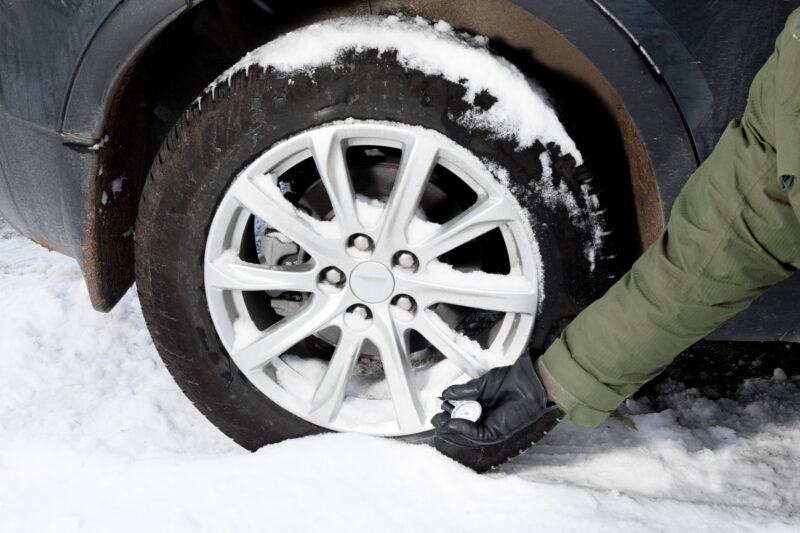
It’s good to note that all-wheel drive and four-wheel drive features can help demonstrate easier acceleration but don’t always mean shorter stopping distances on slippery roads.
Inspect Your Battery and Fluids
Cold temperatures can diminish battery performance, which can make it challenging to start your vehicle. Get your battery tested if it is older than three years or displays signs of weakness.
Continue your inspection by checking your:
- Antifreeze and engine coolant.
- Windshield washer fluid – consider replacing standard product for one that is rated for freezing temperatures.
- Windshield wipers and defroster. Replace rubber blades that streak or have cracks.
- Headlights, brake lights, and turn signals.
- Brakes and other essential vehicle components.
Assemble a Winter Emergency Kit
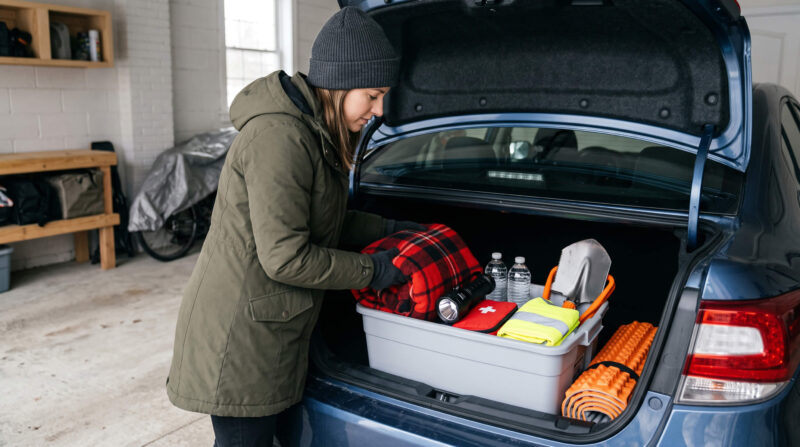
It’s always a good idea to keep some essential supplies in your car in case you get stuck on the side of the road. Pack some warm spare clothing, blankets, a flashlight, water, nonperishable food, an ice scraper, a snow brush, jumper cables, a phone charger, and a first-aid kit.
Smart winter driving tip: Make all your winter preparations before the first big snowfall instead of waiting until the severe weather arrives.
-
Slow Down + Increase Your Following Distance
Speeding is always no-no, but with winter road conditions, it can be especially dangerous. Snow, slush, and ice interfere with tire traction, making it harder to stop or maintain control of a vehicle.
What’s more, even driving at the posted speed limit can be too fast in winter weather. Always consider the environment and be sure to slow down when needed.
Adjust Your Speed to Road Conditions
Slow down when navigating:
- Snowy or icy roads.
- Wet pavement with freezing temperatures.
- Bridges and overpasses that tend to freeze earlier than other surfaces.
- Roads with poor visibility in times of snow or fog.
Avoid accelerating suddenly, making sharp turns, and braking hard. Instead, stick to smooth, gradual movements, which help your tires keep traction.
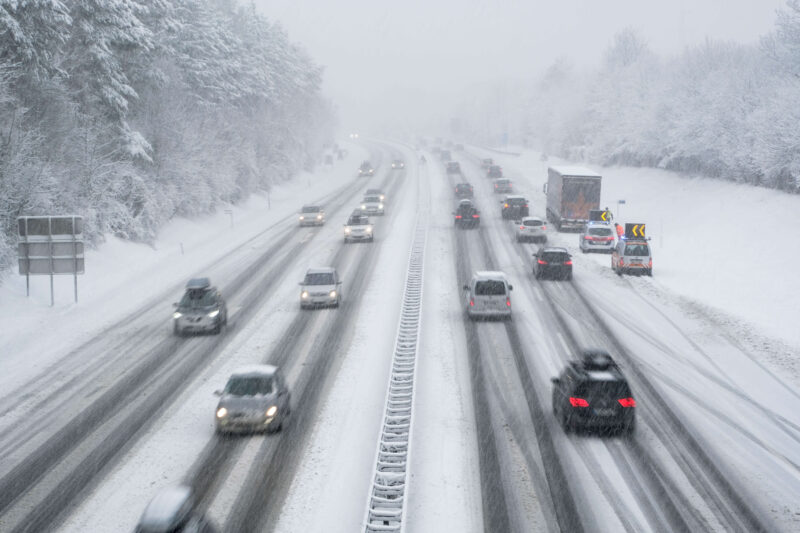
Allow More Space Between Vehicles
Extra space between vehicles means you have more time to react if the car ahead brakes suddenly. In friendly road conditions, a three-second following distance is the general guideline. In winter weather, however, that distance increases substantially. Six seconds or more can be a good starting point, while times of severe snow and ice should mean leaving even more room.
Avoid Cruise Control on Slick Roads
Do not use cruise control when there is ice, snow, or anything that causes roads to be slippery. It’s important to keep hands-on (or feet-on) control of your speed when traction can change unexpectedly.
Remember: Getting to your destination safely is far more important than arriving quickly.
-
Know How to React to Snow, Ice, and Skids
Winter roads can shift without warning, even when circumstances appear safe at first. Learning how to spot hazards and respond accordingly can help you maintain safety and control.
Look Out for Black Ice
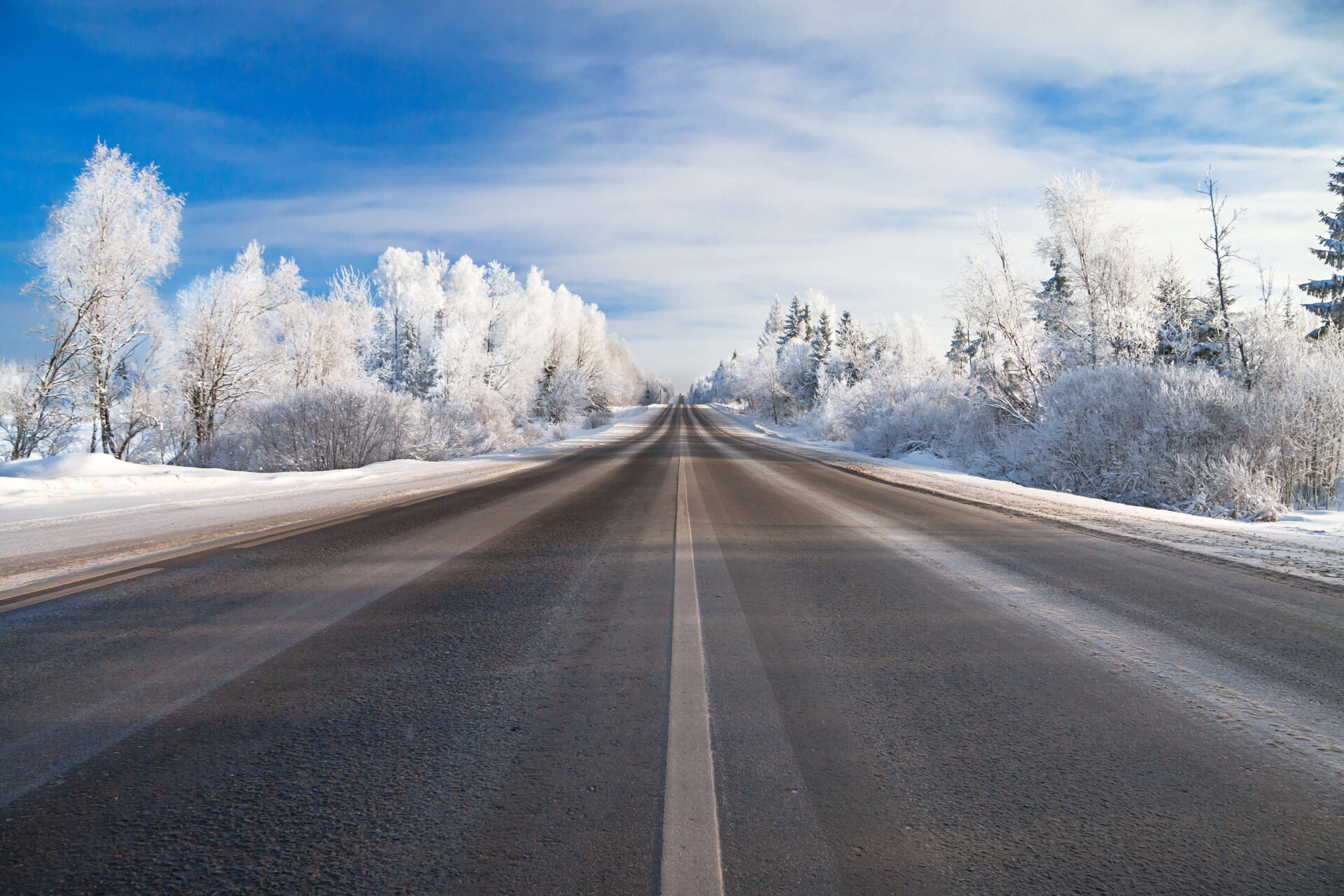
Black ice is a thin, sheer layer of ice that can be tough to see because it can just look like wet pavement. It often forms on bridges, overpasses, shaded areas, and roads exposed to freezing temperatures after rain or melting snow.
To lower your risk:
- Slow down when temperatures drop close to freezing.
- Watch for reflective or glossy pavement.
- Allow more following distance.
- Avoid braking suddenly or steering sharply.
What to Do If Your Vehicle Skids
If your vehicle starts to skid, stay calm and do not make any abrupt movements.
- Ease off the gas.
- Look in the direction you want the vehicle to travel.
- Make small, smooth steering movements without overcorrecting.
- Avoid sudden braking unless preventing an immediate collision.
If the back of your vehicle slides sideways, gently turn the steering wheel in the direction you want the front of the vehicle to go.
If your vehicle has anti-lock brakes (ABS), apply firm, continuous pressure to the brake pedal during emergency braking. Do not pump the pedal; the system is made to help avoid any locking of wheels.
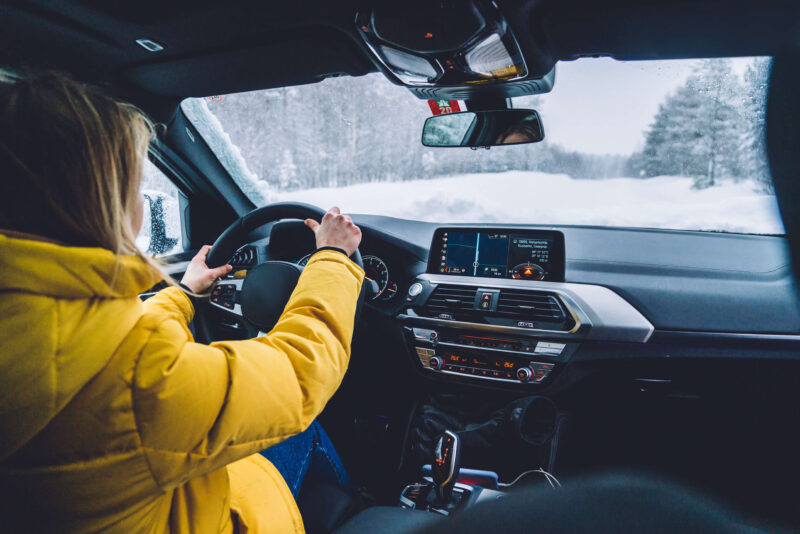
Be Cautious on Hills and Curves
Reduce your speed before starting a curve, instead of braking sharply while turning. When approaching a hill, keep to a controlled speed and avoid aggressive acceleration.
If a hill or road ahead is covered in iced, pull over safely, and consider another route instead of risking a loss of traction.
-
Improve Visibility and Avoid Distractions
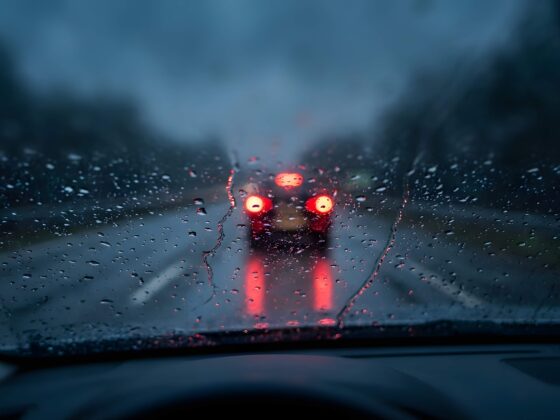
Falling or blowing snow, fog, and reduced winter sunlight can make driving more challenging. Having good visibility is a must when it comes to identifying hazards and reacting in time.
Remove Snow and Ice Before Driving
Before setting out for your drive, clear any snow and ice from all windows, mirrors, headlights, taillights, and from any cameras or sensors.
Clean off any snow from the roof and hood as well, as it can slide down to the windshield when braking or blow onto vehicles behind you.
Many states have laws regarding obstructed views or snow and ice that make road hazards; it’s a good idea to get familiar with your state’s requirements.
Use Your Headlights Appropriately
Always switch on your headlights in times of reduced visibility. In conditions like fog and heavy snowfall, low beams are usually preferred, as high beams can cause reflection off moisture and snow, making it more difficult to see.
Daytime running lights don’t always illuminate your rear taillights. Rather than assume, check that all your vehicle’s lights are working properly before leaving.
Stay Focused
Winter driving means giving your full attention to the road. Put your phone away, arrange your navigation before leaving, and avoid fiddling with controls while on the move.
Remember to:
- Watch out for pedestrians and cyclists.
- Give plenty of room to passing snowplows.
- Stay aware of slowing traffic and road hazards ahead.
- Enter intersections with caution, as packed snow and repeated braking can make for slippery surfaces.
Keeping alert means being able to spot changing conditions before they become emergencies.
-
Plan Ahead: Know When Not to Drive
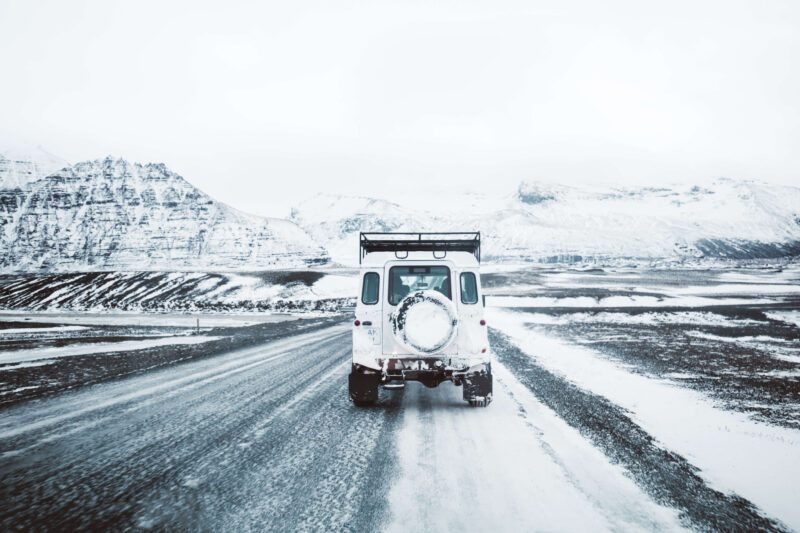
Sometimes the best decision you can make is to push off your trip to a safer time. Big ice storms, blizzards, and whiteouts can make driving hazardous – regardless of how experienced you are or how equipped your vehicle is.
Check Weather and Road Conditions
Before heading out, look at the forecast and check official state transportation news for any road closures, traffic incidents, and chain requirements, if applicable.
Some common, useful resources include:
- The National Weather Service – for winter storm warnings and advisories.
- Your state department of transportation – for road conditions.
- Local emergency management agencies – for travel alerts.
Check into the conditions on your whole route, particularly if you plan to drive through mountain passes or rural areas. If there are advisories against unnecessary travel, postpone your trip if possible.
Organize a Winter Travel Plan
For longer trips, share your route and estimated time of arrival with a trusted friend or family member. Give yourself extra travel time and know some secure stopping points if conditions get bad.
Before starting your drive, be sure you have enough fuel and/or battery charge, and that you’ve got a well-stocked emergency kit.
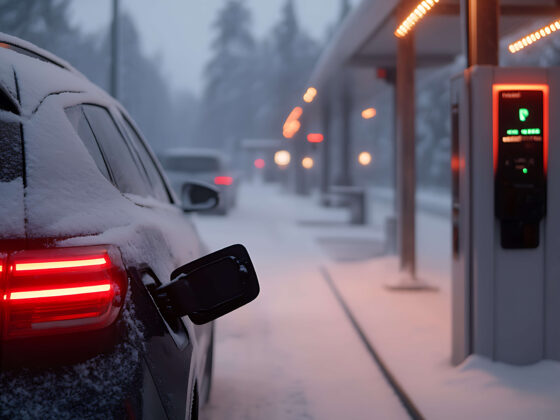
For drivers of EV’s, take into account any reduced driving range caused by cold weather and plan for necessry charging stops.
What to Do If You Get Stranded
If your vehicle breaks down in a winter storm:
- Safely move away from traffic if possible.
- Switch on your hazard lights and contact roadside assistance.
- Call 911 for any immediate danger or medical emergency.
- When it is safe to do so, stay with your vehicle so rescuers can find you.
- Stay warm by putting on any extra clothing and blankets.
- If you keep the engine on for heat, be sure the exhaust pipe is free of snow and crack a window slightly to reduce carbon monoxide risks.
Do not ignore any possible carbon monoxide poisoning symptoms, like headache, dizziness, nausea, or confusion. If you feel any of these, get yourself into fresh air and seek emergency help.
FAQs About Winter Driving
What is the safest way to drive on icy roads?
Reduce your speed, increase your following distance, and avoid sudden braking, acceleration, and steering. If conditions are extreme, delay your trip if possible.
Are winter tires better than all-season tires?
Winter tires are made to allow for better traction in cold temperatures and on snow and ice. All-season tires may be fine in milder climates, but winter tires often perform better in places where heavy snow and severe cold are common.
Is four-wheel drive good enough for winter driving?
No. Four-wheel drive and all-wheel drive can be helpful with acceleration, but they don’t necessarily provide safe braking or cornering on slippery roads. Good tires and driving habits are still crucial.
When should I avoid driving in winter weather?
Avoid traveling through blizzards, whiteout conditions, and severe ice storms, if possible. If visibility is extremely poor or you cannot control your vehicle properly, stop in a safe place when possible, and wait until conditions ease up.
Make Winter Driving Safety a Priority
Driving safely in winter weather begins with the right preparation and a careful approach. By keeping your vehicle in top condition, slowing your speed, spotting icy conditions, improving visibility, and planning ahead, you can reduce the risks that often come with winter travel.