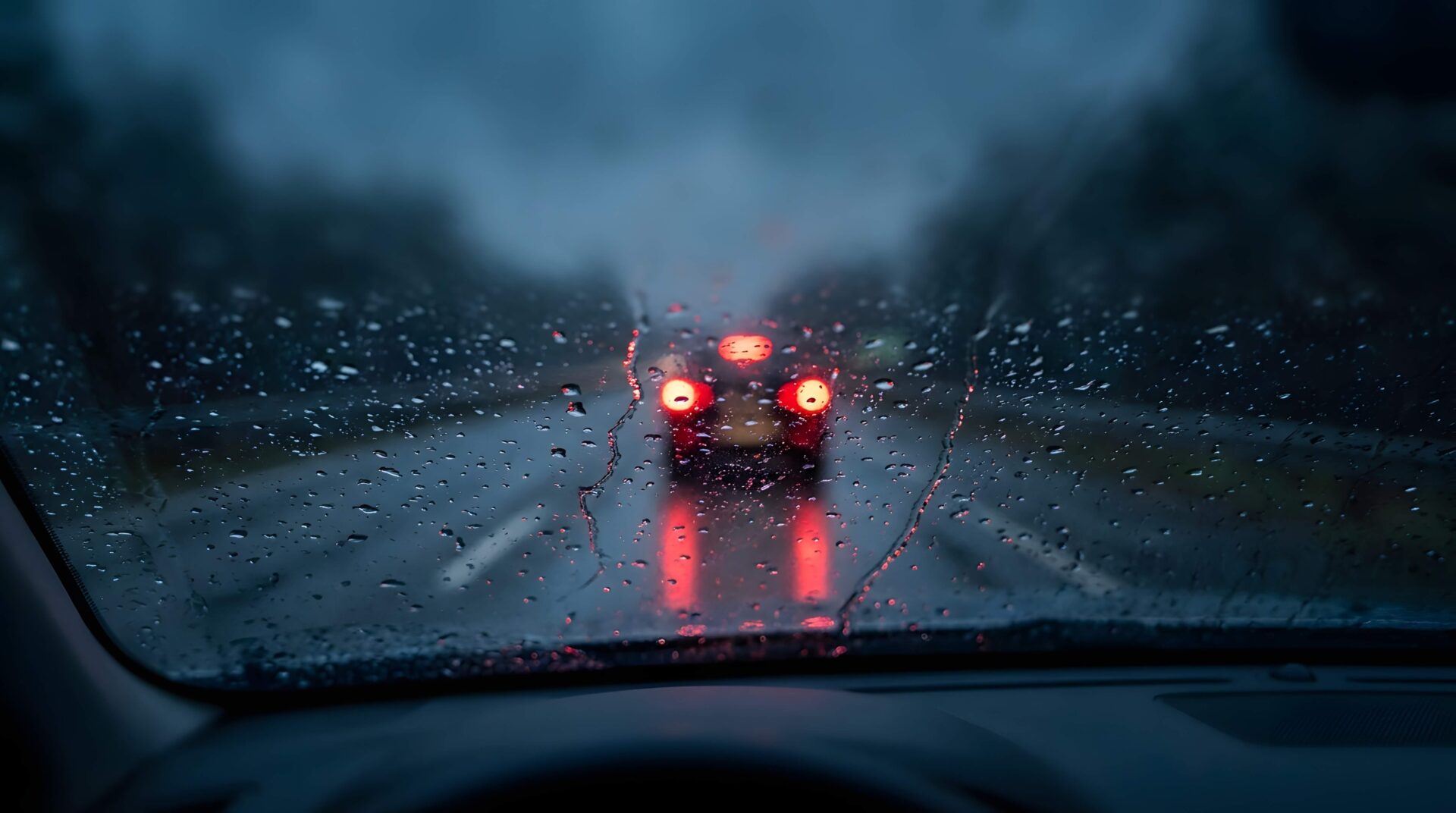
Summer thunderstorms can come out of nowhere, pouring down heavy rain, flashing lightning, hail, strong winds, and even flash flooding. If you’re ever caught driving in a thunderstorm, understanding how to navigate safely through can help lower the chance of accidents or other precarious situations.
Use eTags© to Quickly Complete Your DMV Service. Renewals, Title Transfers and More, All Online!
In this article, we’ll review some of the top tips from U.S. safety agencies.
-
Decrease Speed and Increase Following Distance
Heavy rain turns into slippery roads, which can make it more difficult to control or stop your vehicle. The National Highway Traffic Safety Administration (NHTSA) recommends slowing down in rainy conditions and allowing for a larger following distance between you and the car in front of you. This, of course, gives you more time to stop in case of a sudden brake up ahead.
When driving through rainstorms:
- Slow down.
- Make extra room between you and the vehicle ahead.
- Try not to brake, steer, or accelerate suddenly.
- Use headlights in poor visibility.
- Maintain alertness and awareness of pedestrians, cyclists and other vehicles.
**Important to note: Deep puddles can result in your tires to losing contact with the road. In order to ovoid the possibility of hydroplaning or loss of control, move slowly and with care through deeper standing water.
-
Avoid Flooded Roads
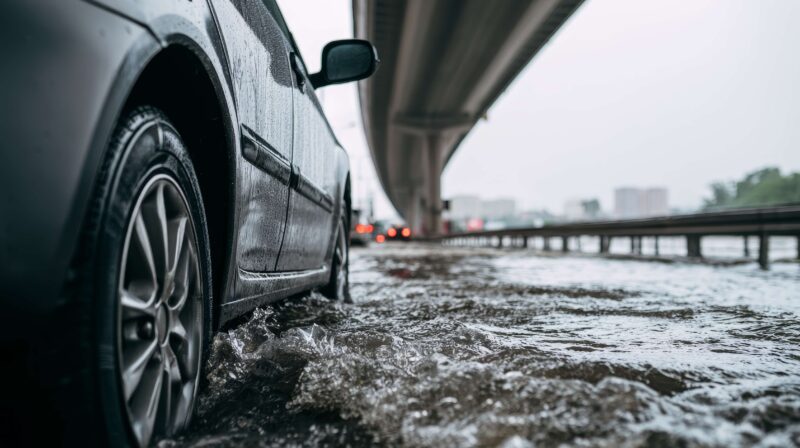
Flash flooding is one of the most serious hazards of summer thunderstorms. NHTSA states that just 12 inches of rushing water is enough to carry away most cars, and only two feet of water can carry away trucks and SUVs. If a roadway is covered in water, or if there are barriers blocking the road, turn around and find an alternative route.
The U.S. Fire Administration provides the same safety message about flooding: when there is water covering a roadway, don’t drive through it—turn around!
In addition to the risk of floating away, it’s also smart to know that the road beneath floodwater could be damaged or even washed away.
-
Pull Over If Driving Becomes Unsafe
If a heavy downpour makes visibility difficult, or if hail, debris or gusting winds make driving dangerous, consider pulling over in a safe spot.
According to the National Weather Service (NWS), remaining inside a vehicle during a severe thunderstorm is safer than venturing outside. That said, they also recommend driving to the closest secure shelter if there is enough time and safety to do so.
When choosing a safe location to pull over, stay away from:
- Flooded area
- Downed power lines
- Spots with the potential of falling trees or debris.
-
Remain Inside a Hard-Topped Vehicle During Lightning
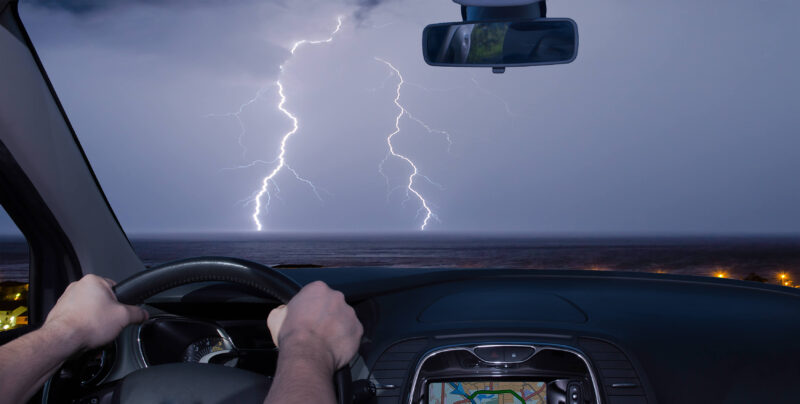
In the case of storm with lightning, an enclosed, hard-topped vehicle with closed windows can be a safe harbor. According to the NWS, the vehicle’s metal exterior helps protect passengers by directing the electrical current around the outside of the vehicle. Interestingly, it’s not the rubber tires that provide protection.
If lightning is close:
- Close windows.
- Remail inside the vehicle.
- Don’t touch metal surfaces.
- Avoid getting out just because the rain temporarily becomes lighter.
The NWS suggests staying in a safe shelter for at least one half hour after the last thunderclap.
-
Check the Weather
If you’re planning on driving during storm season, monitor weather forecasts before leaving, and keep an eye on any changing conditions while on the road.
Remember, staying safe also means, not checking your phone while driving. If you need a weather update, pull over somewhere safe first.
The Bottom Line
If you’re ever caught driving in a summer thunderstorm, the keys to safety are: slow down, make more following distance, avoid flooded roadways, and pull over when visibility lessens or if driving conditions become unsafe. When lightning is close, stay inside your hard-topped vehicle with the windows shut. With these responses in mind, you can drive stress-free, knowing you have the tools to navigate summer storms.