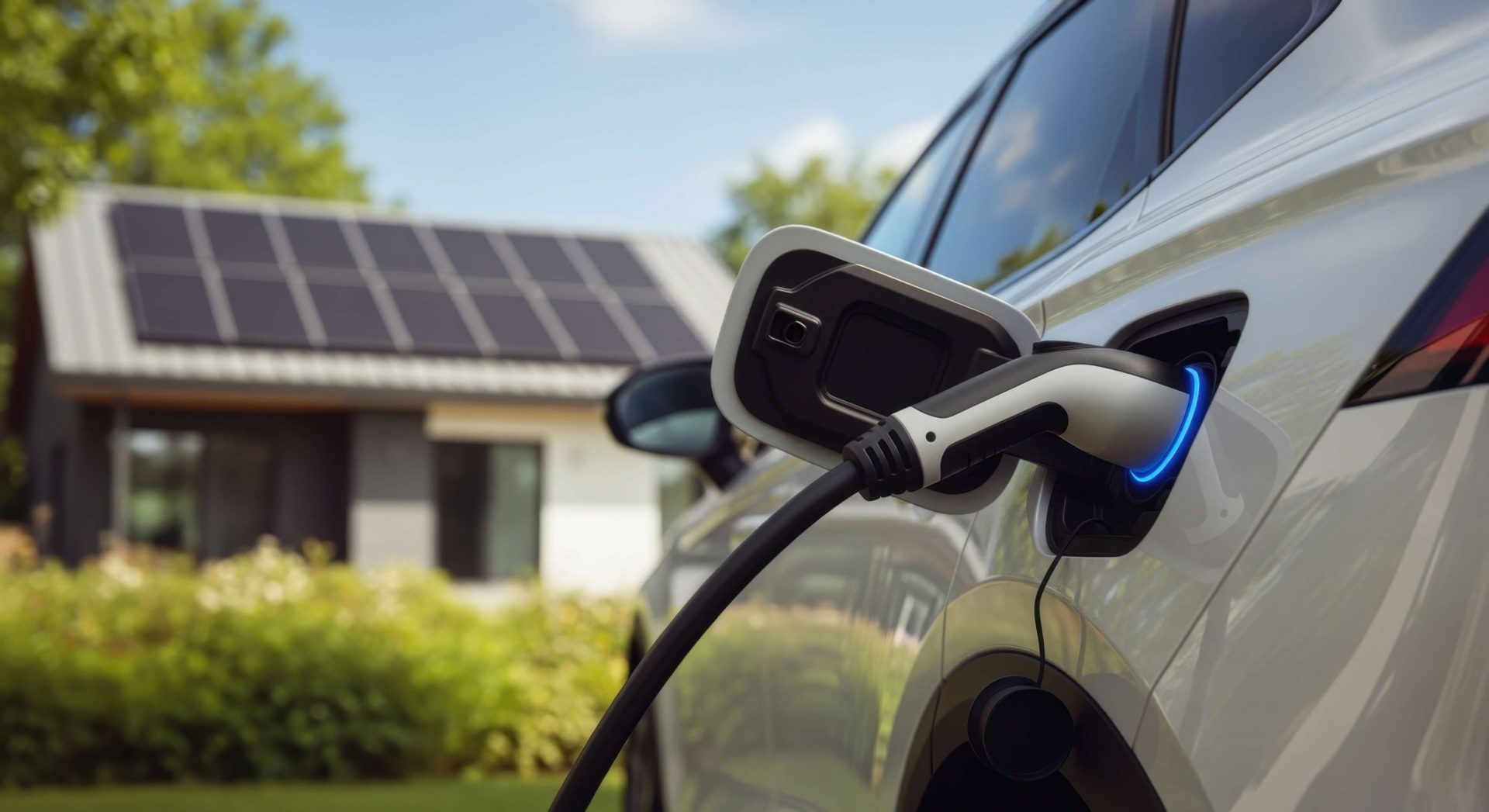
Electric vehicles (EVs) are everywhere these days. The choice to turn to a hybrid or fully electric vehicle has become ever more popular as more folks look for sustainable solutions for both commuting and enjoyment. Of course, unlike regular cars that use gasoline (or diesel) for power, EVs use electricity to fuel their engines via rechargeable batteries. So it stands to reason that if you’re an EV owner, it’s a good idea to understand the charging process. And that’s where we come in! So here is a user-friendly guide to help you make sense of all the ins and outs when it comes to charging your electric vehicle.
Use eTags© to Quickly Complete Your DMV Service. Renewals, Title Transfers and More, All Online!
What Types of Electric Vehicle Charging Stations Are There?
There are three types of EV charging stations available currently. They are:
- Level 1 Charging: At the entry point of charging options, this is one the simplest and most convenient way to charge your EV…at home. All electric vehicles comes standard with a Level 1, 120-volt charging kit that allows the battery to be plugged into a normal household outlet. (Though when we say “normal,” please note that you may have to consult a certified electrician before your first charge to be certain that your home’s electricity is up to the task.) While this system is easy to use, Level 1 charging is on the slower side, and offers just three to five miles of driving range per charging hour. This translates to anywhere between 20 to 60 hours for a full charge, which means it is mostly suitable for plug-in hybrid vehicles with shorter electric ranges.
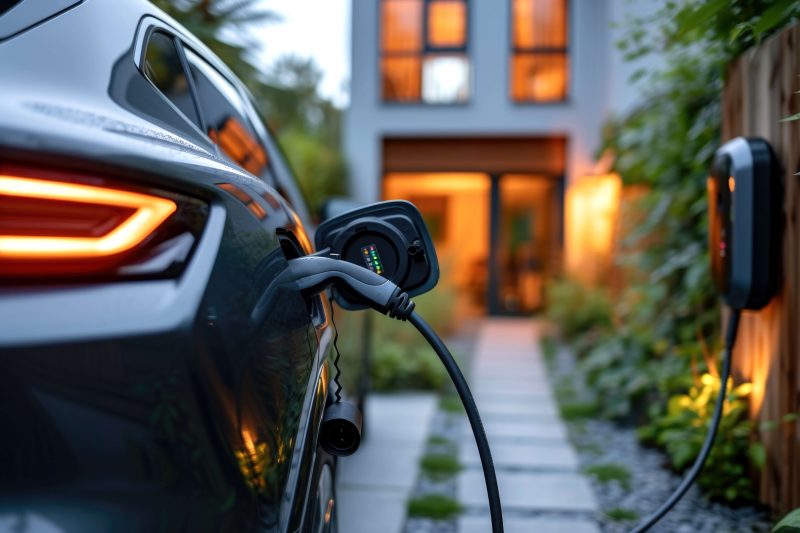
- Level 2 Charging: At mid-range, this form of charging offers a somewhat faster alternative, Level 2 charging uses a more powerful, 240-volt charger, which can provide 12 to 60 miles of range per charging hour. While this type of charger can be installed at home by a certified, experienced electrician, they are also commonly found in public charging stations. These Level 2 chargers can take eight to ten hours to reach full juice, which is a marked improvement on Level 1. Of course, installation can cost in the ballpark of $500 up to to $2,000, but generally there are rebates and incentives offered that can help soften the blow of that price tag.
- Level 3 Charging (DC Fast Charging): The grand poo-bah of charging option, this level is perfect for long-haul road trips. Level 3 chargers owe their super charging speed to their use of direct current (DC). This form of chargers are mainly found in public stations – both because of their tricky (read: don’t try this at home) power requirements and because of how much they cost. A Level 3 station can charge a vehicle up to 80% capacity in as few as 20 minutes. That said, this sort of juicing up is not recommended for frequent use as it can adversely affect the life of the battery.
How Do I Charge My Vehicle At Home?
Home charging is relatively simple and can be done by following your Owner’s Manual…which will likely include these steps:
- Open Charge Port: Access the charge port either by using your vehicle’s touchscreen commands or by manually pressing the port cover to open it.
- Insert Connector: Fit the charger connector plug into your vehicle’s charging port. For Level 1 charging, you can connect the home charger kit to a wall outlet.
- Set Charging Limits: For most EV’s with a touchscreen, you can set charging limits here. It’s a good idea to keep the charge limit at 80%, which can help preserve the life of the battery. Occasionally, a full charge is okay for longer trips.
- Stop Charging: When charging is finished, it will either stop automatically based on the set limit, or you can stop the session using the touchscreen, followed by unlocking the charge port and disconnecting the cable.
How Do I Use Public Charging Stations?
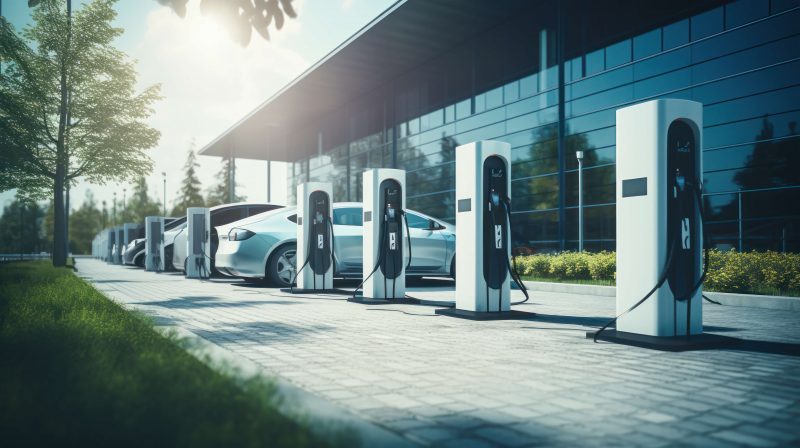
Public stations are perfect for on-the-go or last-minute charging. As of late, station are widely available in spots like public parking lots, airports, and hotels. Depending on where you work – especially if it happens to be at in a tech industry – many companies provide charging onsite.
Here’s how to hook up to a public charger:
- Find a Location: If you don’t know of a site already, there are several apps available like ChargePoint that can help guide you to charging stations worldwide.
- Find the Cable: Cables are normally connected to the station, but they may require scanning a QR code or app connection if they are mounted on a pole.
- Connect and Start Charging: Insert the cable into your car’s port. You will likely be asked to authenticate via an app or credit card, and then you can start the session.
- End the Session: When you’ve reached your desired charge, end the session via card or app, then unplug and return the cable.
And there you have it: a simple guide to charging your EV. And no matter what type of car you drive, you’ve come to the right place for all your title and tag needs. Head on over to our homepage and let us lend a hand – because as always, at eTags, we’re here to help!




2 comments
I own and EV an ID 4. We are dealing with these new batteries, Solid-State that will be coming on the market soon. Some of these new Solid-State batteries will have ranges from 500 to 1200 miles and will charge in about 10 minutes. This will be a move that can rock the Fossil Fuel companies to invest in Electric Charging, it appears that Shell is starting to invest in these chargers. We have one in Rochester NY. at the Wegmans in Pittsford Plaza
Chargers will not change as we move to solid state, but this article does not mention two things that EV drivers need to be aware of.
1. Your car’s charging curve.
2. The capabilities of a charger you want to use!
This article talks about Level 3 chargers, but it does not mention that Level 3 chargers have a huge range in the power they can deliver! Some are limited to 50 kW while others today can put out as much as 400 kW! And, China is already introducing 1000 kW Level 3s! If you have a car that can accept the higher power, then you will charge faster. A 400 kW charger is 8 times as fast as a 50 kW charger!
But that is not always the case, because the charging curve for your car may max out at 50 kW! This means you can plug into a 400 kW charger, but your car will still limit you to suck juice at only 50 kW! My Chevy Bolt is one of these cars limited to a meager 50 kW. If on the other hand, you car’s charging curve can accept 350 kW, then although you can charge at a 50 kW charger, it will be very slow. You would be better off to search for a 350 kW or 400kW to be able to charge more quickly.
Solid State batteries that you mention will have great charging curves. My guess is that they will max out at 500 kW or higher — maybe even as much as 800 kW?
Some of the Apps not only tell you where the Level 3 chargers are located, they will also allow you to filter them by their capabilities! That means if you are looking for a charger that is at least 250 kW, then it will filter out anything lower than that on the map. That’s a REALLY nice feature to have when you are in a hurry.
Also, as a curtesy, if your car is only capable of 50 KW, then don’t hog a 400 kW charger if a 100kW is available. You won’t charge any faster, and all you will do is force someone who has a car that can actually use the 400 kW charger, to use the slower charger and charge more slowly.
Just saying…