When looking back at automotive history, figures like Henry Ford and Karl Benz are often obvious parts of the conversation. However, some of the industry’s most important innovations were developed by women whose names have largely become obscure. We’re talking about elements that have transformed vehicle safety, comfort, and performance. In this eTags history article, we’ll dive into three outstanding automotive advancements designed by women…innovations that have changed the face of driving.
Use eTags© to Quickly Complete Your DMV Service. Renewals, Title Transfers and More, All Online!
3 Inventions by Women that Changed the Automotive World Forever
-
Windshield Wipers
In 1903, Mary Anderson was granted a U.S. patent for one of the first effective windshield wiper systems. Galvanized into action by witnessing streetcar operators contend with visibility issues during rain and snow, she designed a rubber blade that could be operated from inside the vehicle.
While automobile manufacturers were hesitant at first to adopt her invention, its efficacy was eventually recognized and slowly became a standard feature on cars. Today, windshield wipers are undeniably one of the most critical safety features in vehicles.
How Windshield Wipers Changed the Automotive Industry
Proper visibility is crucial for safe driving, and Anderson’s contribution drastically reduced the risks of driving in inclement weather.
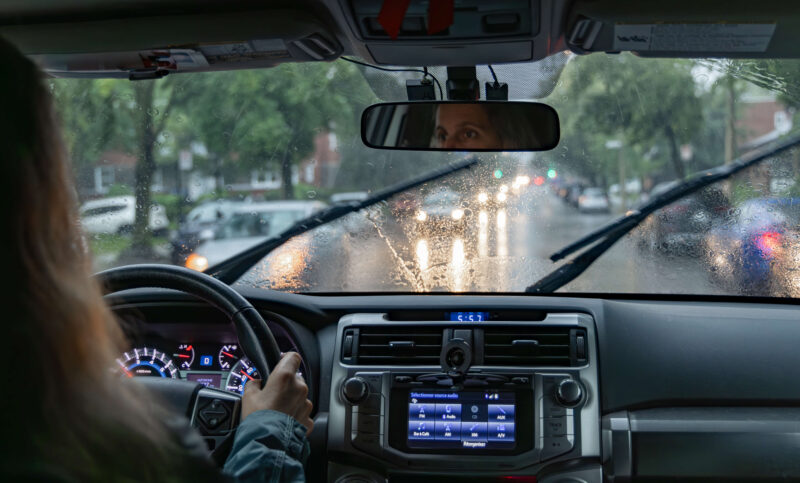
Anderson’s Windshield Wipers:
- Improved visibility during rain and snow
- Enhanced driver and passenger safety
- Afforded the convenience of operating from inside the vehicle
- Were the foundation for today’s advanced windshield wiper systems
Over a century later, every single modern vehicle holds the original blueprint of Anderson’s groundbreaking design.
-
Automobile Heating System
In the early days of automobiles, comfort may not have been the first thought when considering automotive innovation. Yet, we know that comfort plays a major role in driver safety and the overall driving experience. In 1893, mechanical engineer Margaret A. Wilcox patented one of the earliest automobile heating systems.
She proposed a design that took the warm air generated by the vehicle’s engine and redirected it into the passenger space. Although cars were still in their very early days, and her invention isn’t identical to the heating systems used today, her ingenuity anticipated the use of engine heat recovery that would later become the standard in vehicle heating systems.

Why the Wilcox Heating System is Important
Margaret Wilcox understood the potential of channeling excess engine heat into a practical means of warmth rather than wasting that energy.
As a result of Wilcox’s vision, modern automotive heating systems now:
- Keep drivers and passengers comfortable in cold weather.
- Improve visibility by defrosting and defogging windshields.
- Help with focus and comfort during long journeys.
- Contribute to generally better driving conditions.
Wilcox’s clever strategy showed how smart engineering could benefit both vehicle functionality and passenger comfort.
-
Kevlar
In 1965, while working at DuPont, chemist Stephanie Kwolek invented the material Kevlar. While researching strong, lightweight synthetic fibers to reinforce automobile tires, she made a groundbreaking discovery: Kevlar
Incredibly lightweight, Kevlar is five times stronger than steel by weight. And though the material later became known for its role in protective body armor, its origins in the automotive world are a significant chapter of its story.
How Kevlar is Used in Modern Vehicles
Today, you’ll find Kevlar in a wide range of automotive features, including:
- High-performance tires
- Brake pads
- Drive belts
- Clutches
- Racing components
- Lightweight composite vehicle parts
Because of its rare marriage of exceptional strength and low weight, Kevlar means that manufacturers can build components that are more durable, efficient, and able to of perform under extreme conditions.
Final Thoughts
Automobile history is about more than engines, assembly lines, and well-known manufacturers. It’s also about visionaries who solved problems through creativity and engineering. The work of Mary Anderson, Margaret A. Wilcox, and Stephanie Kwolek proved that ingenuity and practicality can not only impact an industry, but can improve the safety and comfort of drivers forever.